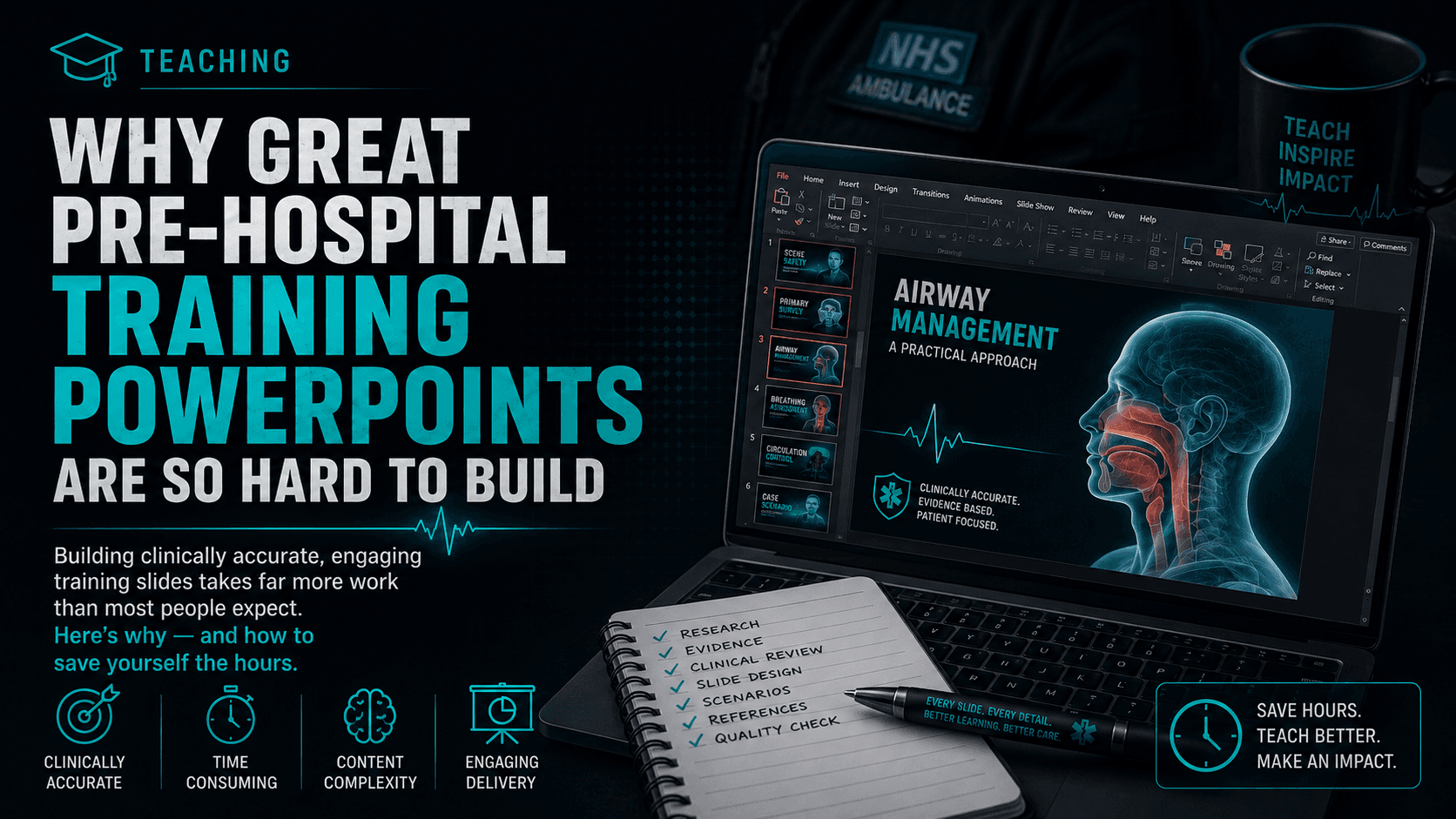
Why Great Pre-Hospital Training PowerPoints Are So Hard to Build
Building clinically accurate, engaging training slides takes far more work than most people expect. Here's why — and how to save yourself the hours.
Ask any clinical educator what eats their evenings and weekends, and building teaching materials is near the top of the list. A single day of FREC or first aid teaching can hide dozens of hours of unseen work behind the slides. If you've ever stared at a blank PowerPoint at 10pm the night before a course, this one's for you.
It has to be clinically accurate — and stay that way
The biggest challenge isn't design, it's accuracy. Every drug dose, algorithm and figure has to match current UK guidance. And that guidance moves: JRCALC, Resuscitation Council UK and NICE all update, which means a deck that was perfect last year can quietly become wrong. Keeping a full course aligned means revisiting every slide, every time something changes.
It takes an enormous amount of time
A good hour of teaching often represents five to ten hours of preparation: researching the evidence, writing the content, building the slides, finding images, creating handouts and drafting assessment questions. Multiply that across a whole qualification and it's a genuine second job.
Design is a skill of its own
Clinically correct isn't the same as clear. Common pitfalls:
- Wall-of-text slides that learners read instead of listening.
- Low-quality or inconsistent images that undermine credibility.
- No visual hierarchy, so the key point gets lost.
Good instructional design — less text, strong visuals, one idea per slide — is a separate craft that most clinicians were never taught.
Sourcing media is a minefield
High-quality anatomical diagrams, procedure photos and videos make teaching land — but finding them (and using them legally) is hard. Grabbing images off Google risks copyright issues and poor quality. Licensed, purpose-made media is expensive and time-consuming to assemble.
Consistency across a team
If more than one person teaches, everyone's slides drift. Different fonts, different depth, different interpretations of the same guideline. Learners notice, and quality suffers.
The slides are the easy part. The hard part is everything that keeps them accurate, engaging and consistent over time.
How to make it manageable
If you're building your own:
- Start from learning outcomes, not slides — decide what learners must be able to do, then work backwards.
- One idea per slide. Put the detail in your delivery and the handout, not on screen.
- Keep a single source of truth and version it, so updates happen in one place.
- Build once, reuse everywhere — modular slides you can drop into multiple courses.
Or start from a professional base
You don't have to build it all from scratch. Our PowerPoint trainer packages are designed and kept up to date by frontline clinicians — fully editable, JRCALC-aligned, and complete with lesson plans, handouts and videos. It's the shortcut past the hardest, most time-consuming parts, so you can spend your energy on the teaching itself rather than the slides.
However you approach it, respect how much work good training materials really take. Done well, they're one of the most powerful tools you have for turning knowledge into confident, capable clinicians.
Clinical insights, straight to your inbox
Get new articles, CPD tips and product updates. No spam — unsubscribe anytime.
Related articles
 Compliance & Governance
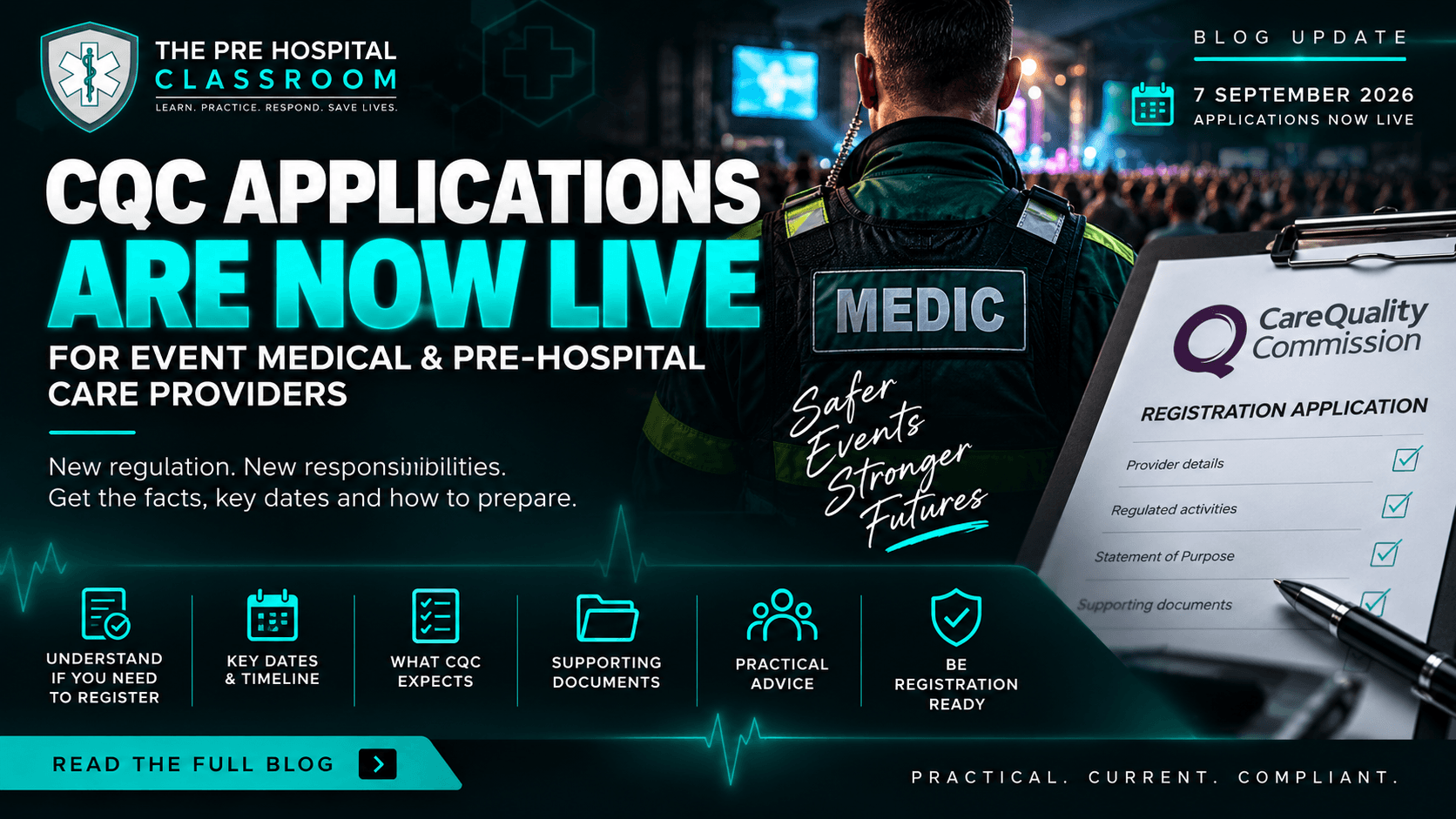
CQC Applications Are Now LIVE for Event Medical Providers: What You Need to Know
From 7 September 2026, providers delivering healthcare and treatment at sporting and cultural events that meets the definition of the regulated activity Treatment of Disease, Disorder or Injury (TDDI) can begin submitting their applications to the Care Quality Commission.
 Compliance & Governance
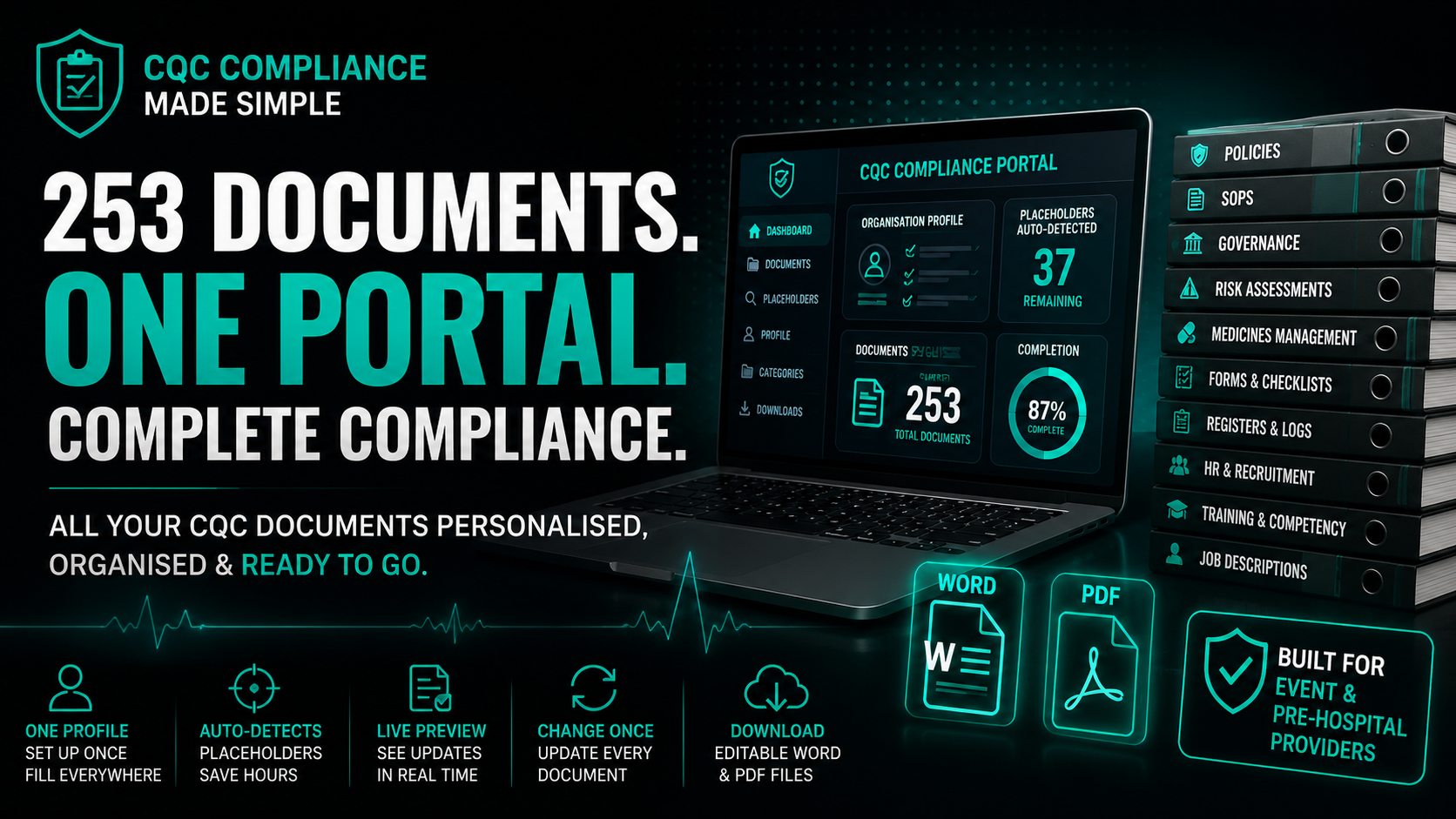
CQC Compliance Without the Document Headache: Introducing Our 253-Document Compliance Suite & Portal
Preparing for CQC registration can mean building and personalising hundreds of policies, SOPs, governance documents, risk assessments, forms, registers and workforce records. Our CQC Compliance Suite combines 253 professional documents with a purpose-built online portal that helps personalise your entire library from one organisation profile.
 Clinical
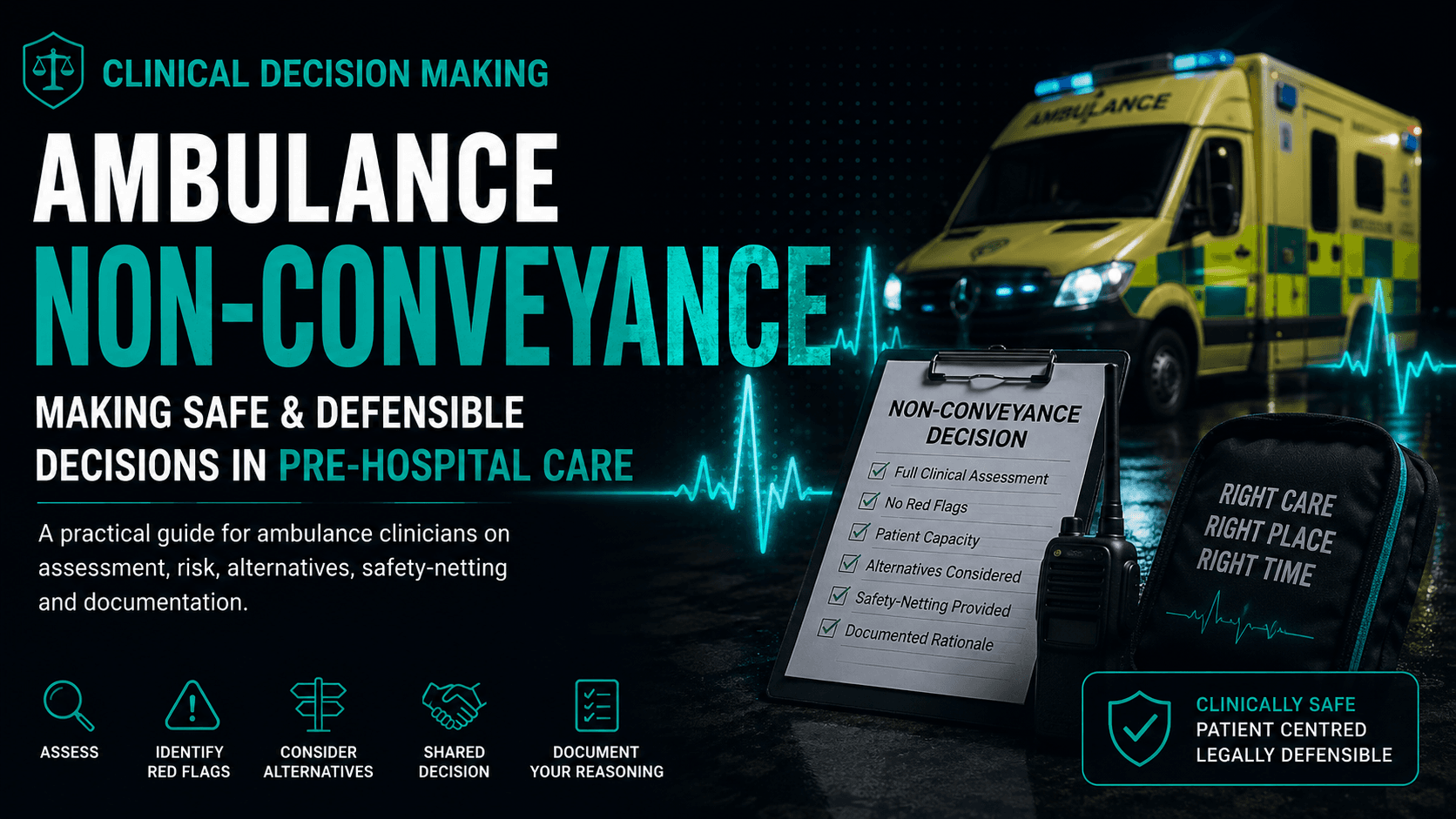
Ambulance Non-Conveyance: Making Safe, Defensible Decisions in Pre-Hospital Care
Non-conveyance has become an increasingly important part of modern UK ambulance practice. With growing pressure across urgent and emergency care, ambulance clinicians are increasingly expected to identify patients who can safely receive care closer to home or through alternative pathways.