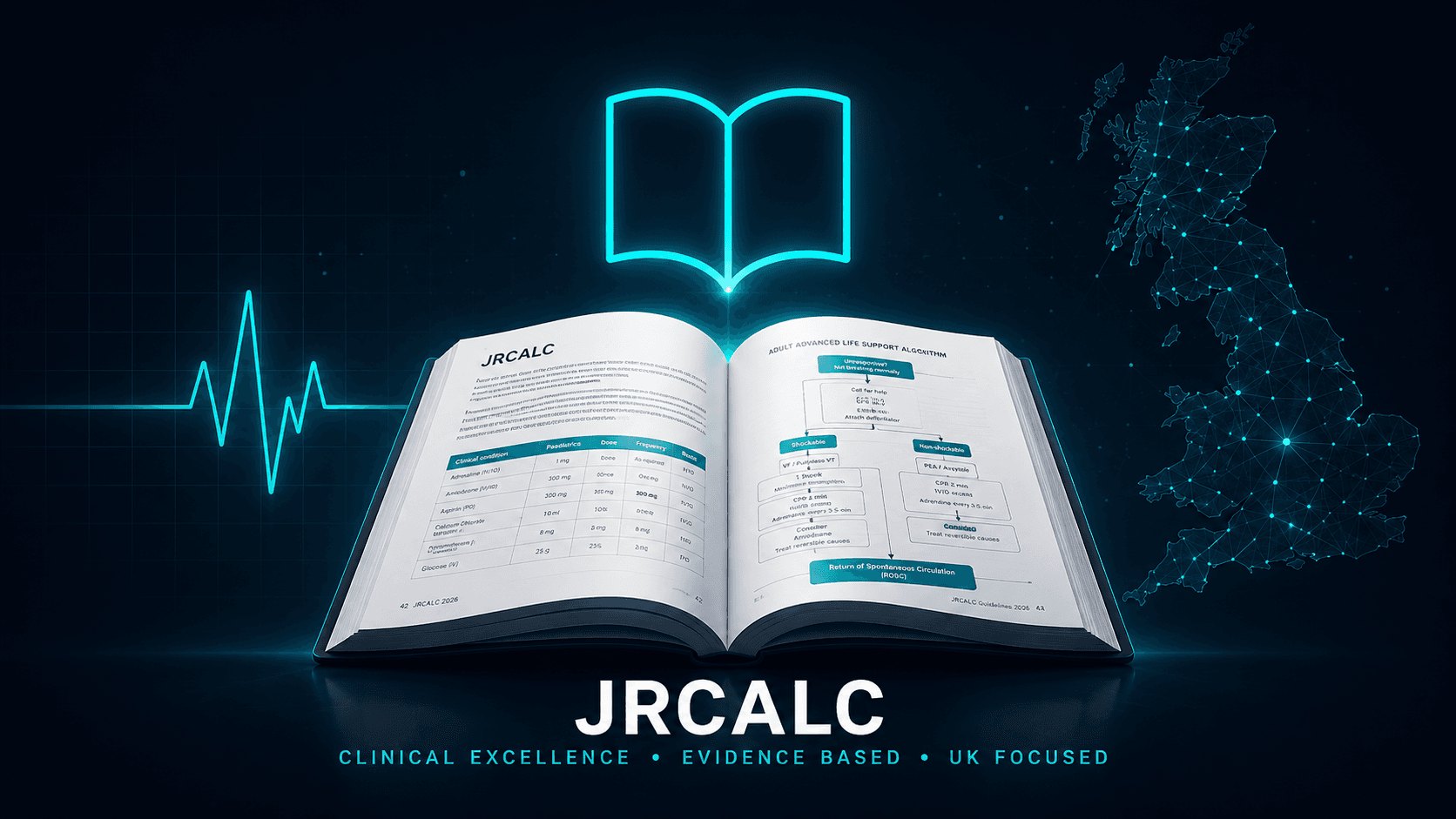
The 2026 JRCALC Updates: Key Changes for UK Clinicians
A clear breakdown of the most important 2026 JRCALC guideline changes and what they mean for day-to-day pre-hospital practice.
The Joint Royal Colleges Ambulance Liaison Committee (JRCALC) guidelines are the backbone of UK pre-hospital clinical practice. Staying current with each update isn't optional — it's central to safe, evidence-based care and to your registration.
Here's a practical overview of the themes that matter most in the 2026 refresh, and how to translate them into what you actually do on scene.
Why the updates matter
JRCALC changes reflect new evidence, medicines updates and lessons from patient safety data. Applying an outdated pathway can mean a missed time-critical intervention — or a drug dose that no longer matches guidance. Reviewing changes as they land keeps your practice defensible and, more importantly, keeps patients safe.
Areas to focus your review
- Medicines and dosing. Always cross-check any drug you administer against the current monograph. Pay particular attention to paediatric weight-based dosing, where small changes have the biggest impact.
- Sepsis and time-critical pathways. Recognition and escalation criteria continue to be refined. Make sure your pre-alert thresholds match the latest wording.
- Mental health and capacity. Guidance increasingly emphasises de-escalation, least-restrictive practice and clear documentation of capacity assessments.
- Cardiac arrest and post-ROSC care. Review any changes to airway strategy, drug timing and transport decisions.
How to embed the changes
Reading the update once isn't enough. The clinicians who apply guidance reliably tend to:
- Summarise the delta — what actually changed versus last year, not the whole document.
- Rehearse it — talk through a scenario that uses the new pathway with a colleague.
- Refresh at intervals — a quick monthly review beats a single annual cram.
Consistent, structured CPD is what turns a guideline update into reliable bedside practice.
Make it easier for your team
If you train others, keeping every session aligned to the latest JRCALC wording is time-consuming. Our PowerPoint trainer packages are built and updated by frontline clinicians so your teaching stays current without you rebuilding slides every year.
Staying on top of guideline changes is one of the highest-value things you can do for your patients and your registration. Block out the time — your future self on a bad shift will thank you.
Clinical insights, straight to your inbox
Get new articles, CPD tips and product updates. No spam — unsubscribe anytime.
Related articles
 Compliance & Governance
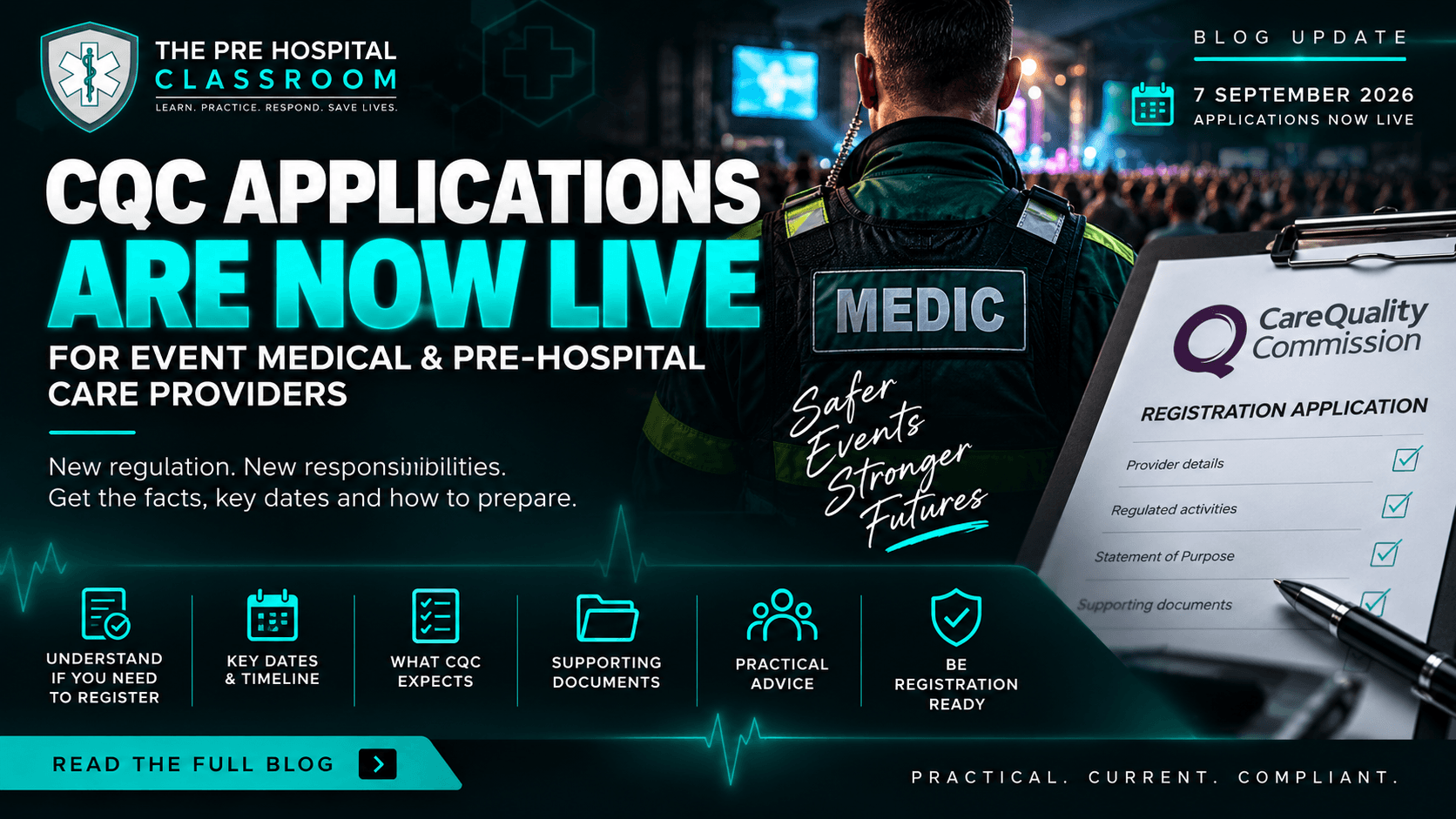
CQC Applications Are Now LIVE for Event Medical Providers: What You Need to Know
From 7 September 2026, providers delivering healthcare and treatment at sporting and cultural events that meets the definition of the regulated activity Treatment of Disease, Disorder or Injury (TDDI) can begin submitting their applications to the Care Quality Commission.
 Compliance & Governance
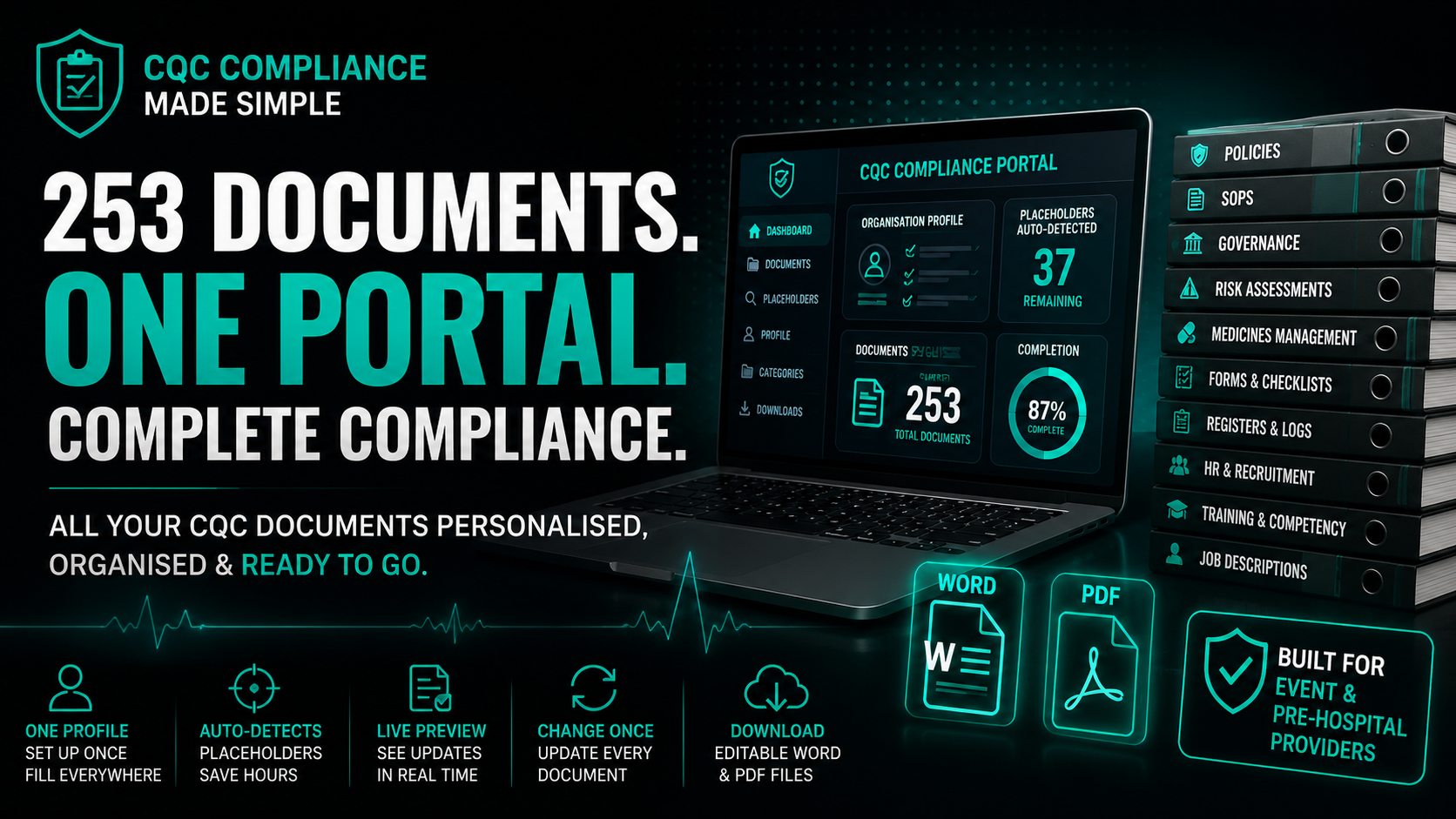
CQC Compliance Without the Document Headache: Introducing Our 253-Document Compliance Suite & Portal
Preparing for CQC registration can mean building and personalising hundreds of policies, SOPs, governance documents, risk assessments, forms, registers and workforce records. Our CQC Compliance Suite combines 253 professional documents with a purpose-built online portal that helps personalise your entire library from one organisation profile.
 Clinical
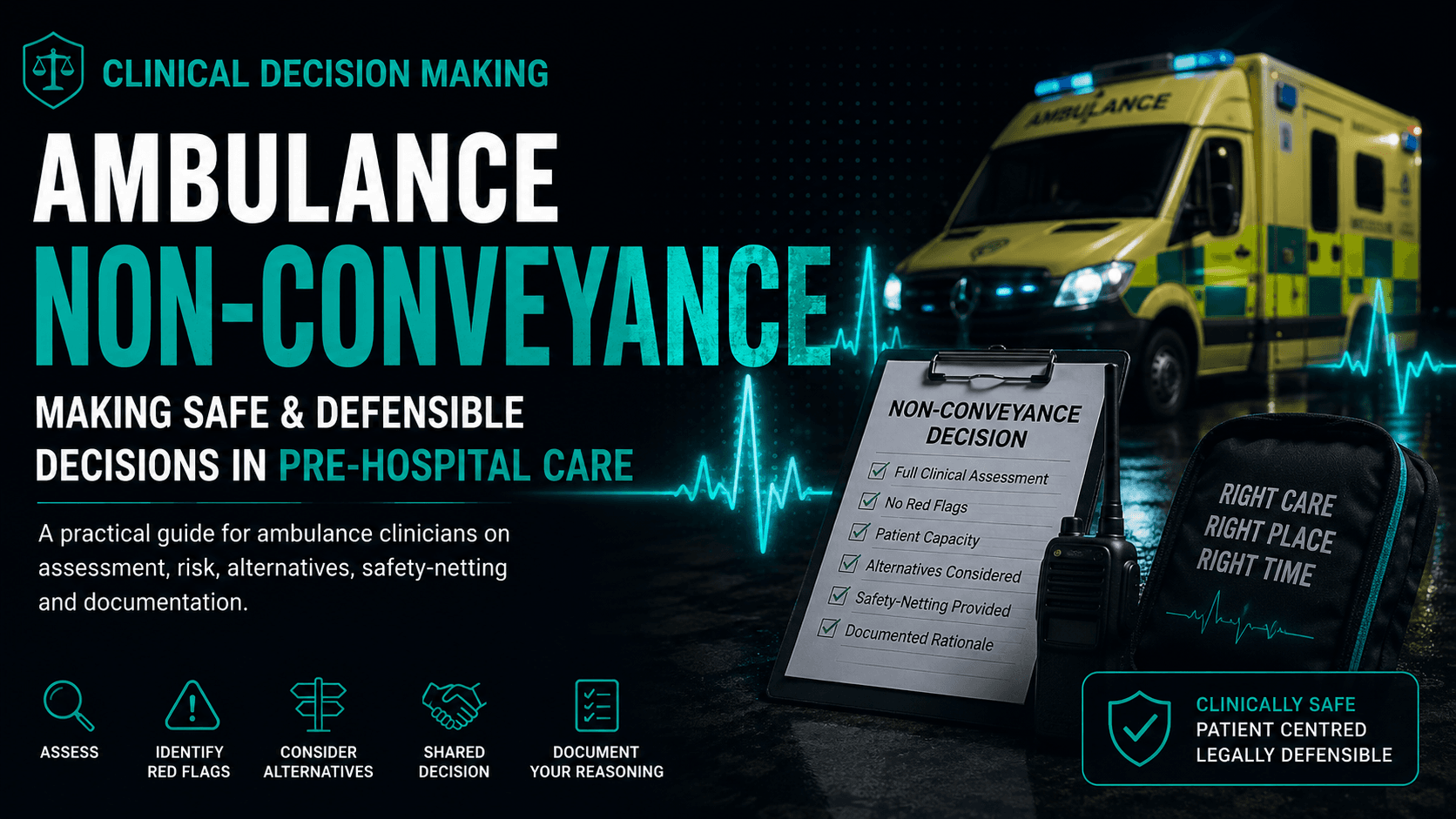
Ambulance Non-Conveyance: Making Safe, Defensible Decisions in Pre-Hospital Care
Non-conveyance has become an increasingly important part of modern UK ambulance practice. With growing pressure across urgent and emergency care, ambulance clinicians are increasingly expected to identify patients who can safely receive care closer to home or through alternative pathways.