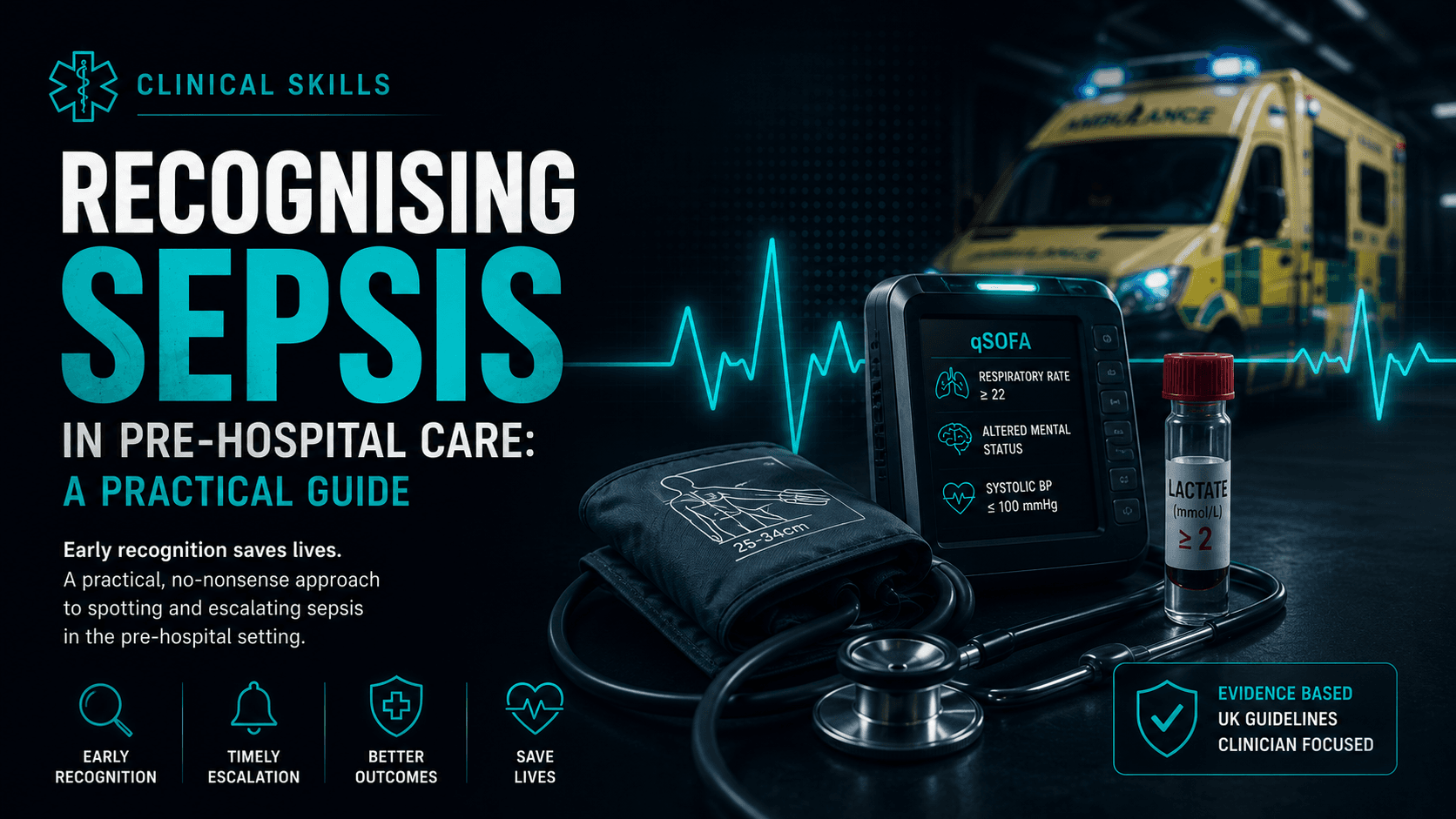
Recognising Sepsis in Pre-Hospital Care: A Practical Guide
Early recognition saves lives. A practical, no-nonsense approach to spotting and escalating sepsis in the pre-hospital setting.
Sepsis kills an estimated 48,000 people a year in the UK, and outcomes hinge on how quickly it's recognised and escalated. As a pre-hospital clinician you are often the first to see the patient — which makes your index of suspicion one of the most powerful tools in the chain of survival.
Sepsis is a clinical diagnosis
There is no single test that confirms sepsis on scene. It's a syndrome: a dysregulated response to infection that threatens organ function. Your job isn't to prove it — it's to suspect it, act, and escalate.
Think sepsis when you see…
- A likely or confirmed source of infection, plus
- Signs of physiological compromise: altered mental state, high or low respiratory rate, tachycardia, hypotension, mottled or ashen skin, reduced urine output, or a non-blanching rash.
Be especially cautious in the very young, the elderly, the immunosuppressed and post-operative patients — they can be septic without a fever.
A simple on-scene approach
- Screen every unwell patient with a plausible infection for red flags.
- Measure a full set of observations, including respiratory rate and conscious level — don't eyeball them.
- Escalate early: a pre-alert buys the receiving team time to prepare.
- Support ABCs and transport without delay when red flags are present.
The single most common failure in sepsis care is under-estimating a patient who "doesn't look that bad." Trust the numbers.
Documentation matters
Record the observations that drove your decision, the source you suspected, and the time of your pre-alert. Clear documentation supports the receiving team and protects you.
Keep the skill sharp
Recognition is a perishable skill. Regular scenario-based practice — not just reading — is what keeps it reliable under pressure. Explore our training resources and simulators to rehearse time-critical decision-making with your team.
Sepsis rewards the clinician who suspects early and acts decisively. When in doubt, treat it as sepsis and let the hospital rule it out.
Clinical insights, straight to your inbox
Get new articles, CPD tips and product updates. No spam — unsubscribe anytime.
Related articles
 Compliance & Governance
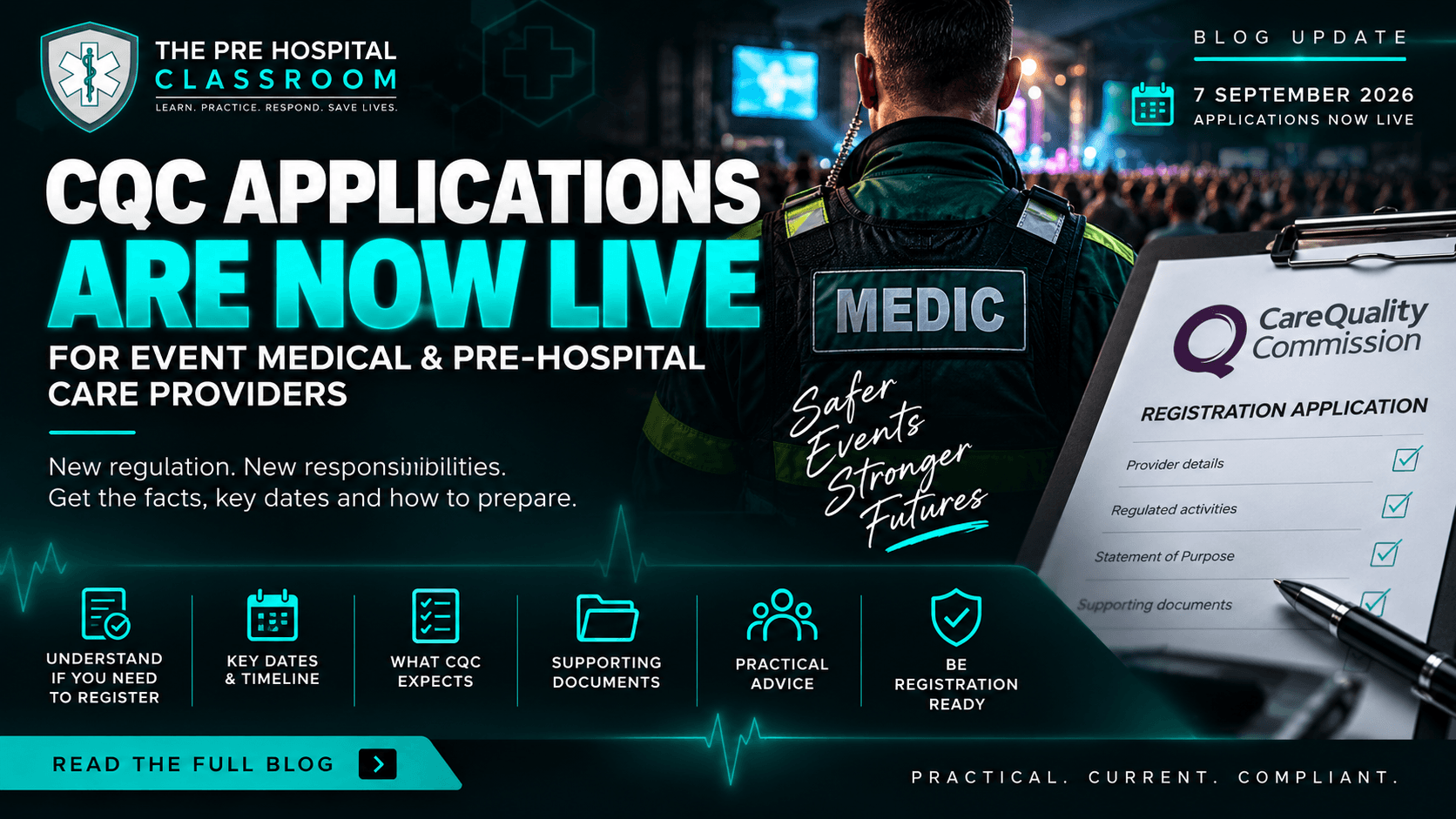
CQC Applications Are Now LIVE for Event Medical Providers: What You Need to Know
From 7 September 2026, providers delivering healthcare and treatment at sporting and cultural events that meets the definition of the regulated activity Treatment of Disease, Disorder or Injury (TDDI) can begin submitting their applications to the Care Quality Commission.
 Compliance & Governance
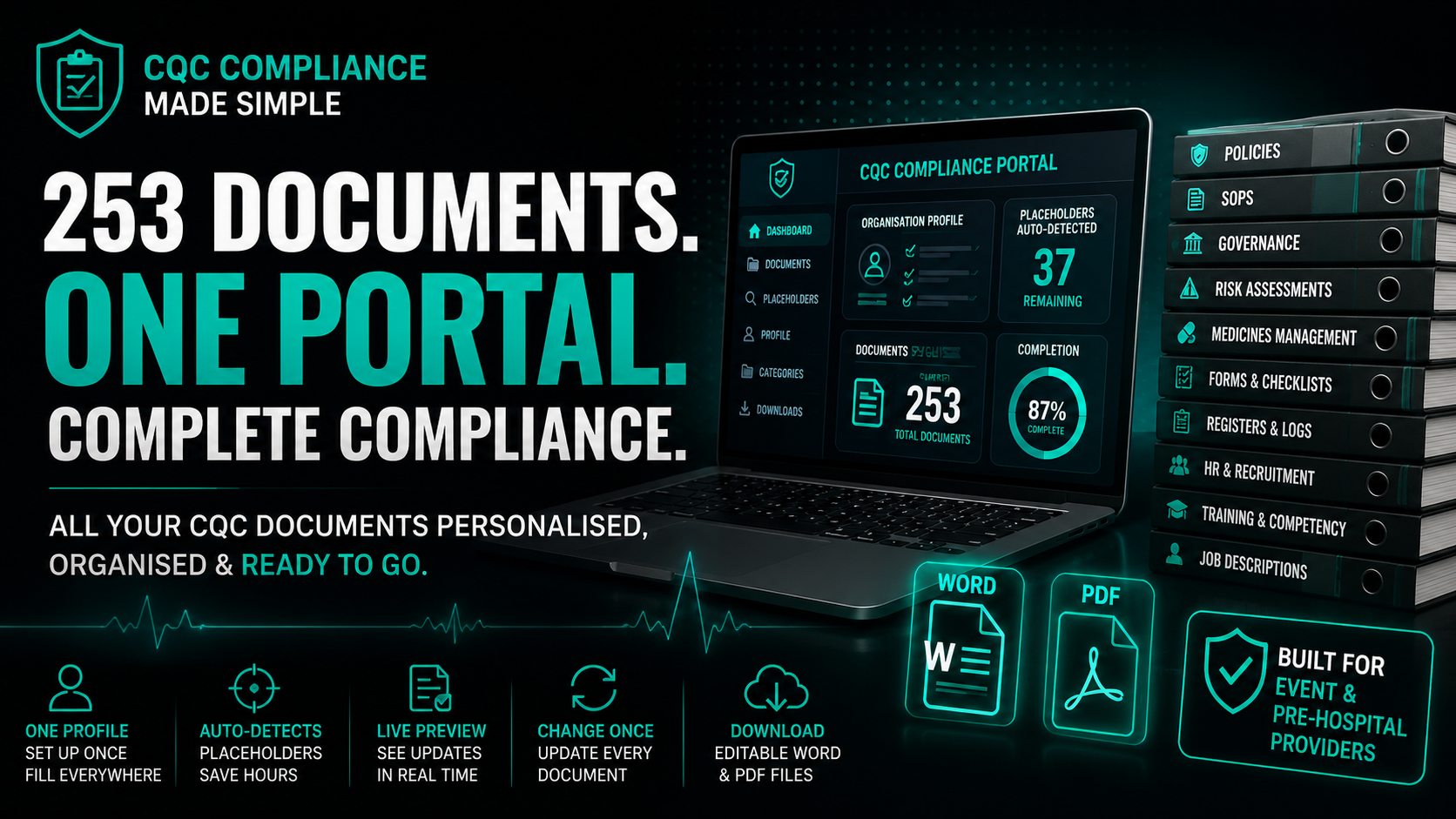
CQC Compliance Without the Document Headache: Introducing Our 253-Document Compliance Suite & Portal
Preparing for CQC registration can mean building and personalising hundreds of policies, SOPs, governance documents, risk assessments, forms, registers and workforce records. Our CQC Compliance Suite combines 253 professional documents with a purpose-built online portal that helps personalise your entire library from one organisation profile.
 Clinical
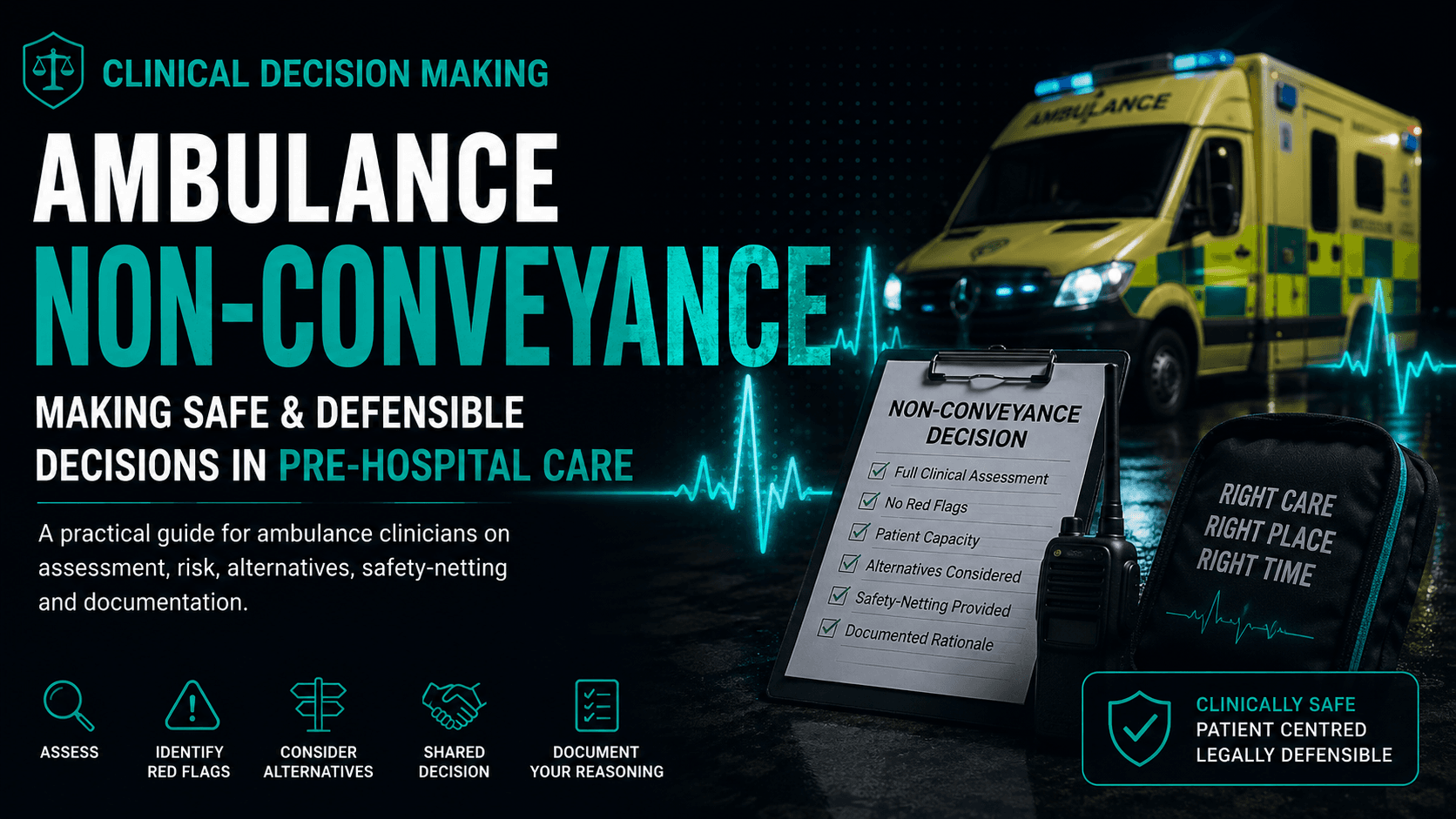
Ambulance Non-Conveyance: Making Safe, Defensible Decisions in Pre-Hospital Care
Non-conveyance has become an increasingly important part of modern UK ambulance practice. With growing pressure across urgent and emergency care, ambulance clinicians are increasingly expected to identify patients who can safely receive care closer to home or through alternative pathways.